
An organisation can be described through buildings, programmes, budgets, annual reports and statistics, but none of these fully explains why it exists. Behind every institution that survives for decades are human beings who chose to believe that something could be different. The story of the African Community Centre for Social Sustainability—ACCESS—is therefore not simply the story of a health facility, a training institution or a development organisation in Nakaseke. It is a story of people. ACCESS describes itself today as a grassroots organisation established in 2003 to serve vulnerable communities through healthcare, education, economic empowerment and environmental conservation. Yet behind those four areas of work are thousands of individual encounters: a patient needing treatment, a child at risk of leaving school, a mother trying to provide for her family, a student hoping to become a health professional, and a community worker travelling into a village because somebody there needs help.
At the beginning of that journey were people willing to turn concern into responsibility. Dr. Robert Kalyesubula, Ms. Katali Estherloy Abaliwano and Mr. James Sewanyana occupy an important place in that history. ACCESS identifies Dr. Kalyesubula as its founder and president, Estherloy as co-founder and managing director, and Sewanyana as co-founder and clinician. Their individual backgrounds are different, but their work converged around a common question: what could be done for people whose opportunities were limited not because they lacked ability or dignity, but because poverty, illness, geography and unequal access to services stood between them and a better life? Sewanyana’s early work, for example, is closely associated with support for orphans, vulnerable children and people living with HIV/AIDS, while Estherloy’s work has increasingly connected community development with education, technology and economic empowerment. The significance of the founders is therefore not merely that they started an organisation; it is that they helped create a structure through which compassion could become organised action.
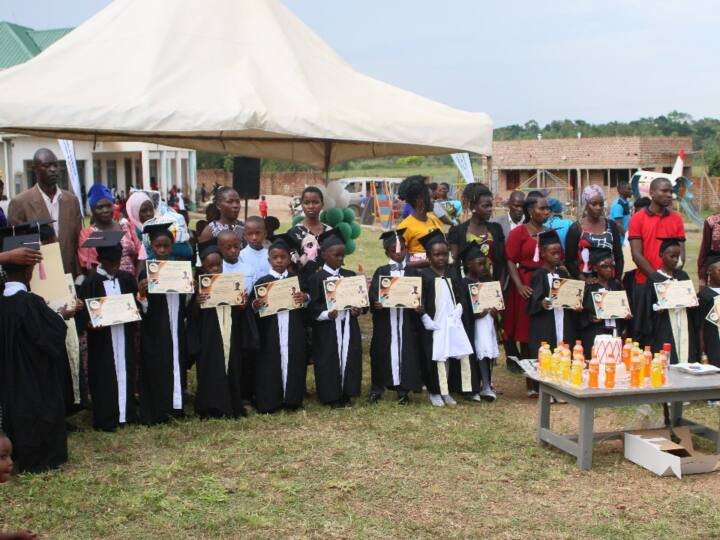
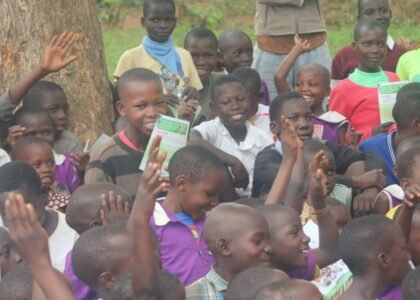
Perhaps nowhere is the meaning of that work clearer than in the lives of orphans and other vulnerable children. Development language sometimes reduces children to abbreviations such as “OVCs,” but behind those three letters are individual lives. There is a child who needs shoes before walking to school, another whose family cannot pay school fees, another who needs books and pens, and another who may need someone simply to visit the home and ask whether everything is all right. ACCESS’s child-support model has included school fees, scholastic materials, healthcare, home visits, mentorship and counselling. Earlier programme records also distinguish between children receiving comprehensive support and others reached through educational materials and follow-up because resources were limited. Such details remind us that vulnerability is rarely solved by a single intervention. Keeping a child in school may require attention to health, family income, emotional wellbeing and the conditions inside the household.
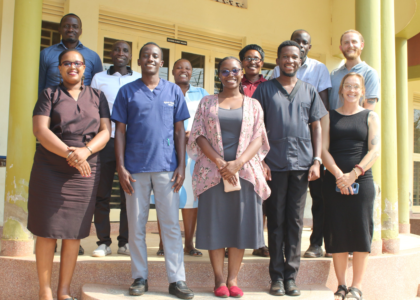
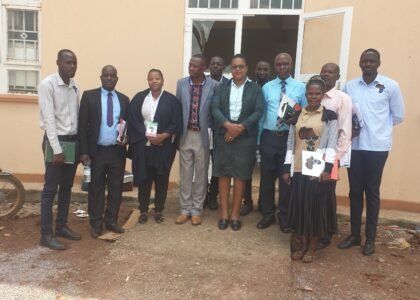
But founders do not carry an institution for more than two decades by themselves. Much of ACCESS’s history has been written quietly by workers whose names may never be known outside the organisation: nurses who remained with patients beyond ordinary working hours; midwives accompanying mothers through moments of fear and hope; teachers preparing children for their first experience of formal learning; project officers travelling to communities; administrators organising what others eventually see in the field; cleaners making facilities safe; drivers carrying teams along difficult roads; finance personnel protecting scarce resources; volunteers giving time without public recognition; and staff members solving problems that will never appear in an annual report. Institutions are often celebrated through the names of their leaders, but they survive through the repeated actions of ordinary workers. Every morning that a clinic opens, every class that begins, every community activity that takes place and every report that reaches a partner is the result of someone’s labour.
Among those workers, community health workers and Village Health Teams reveal something particularly important about the ACCESS model: healthcare does not begin only when a patient enters a clinic. It can begin at the household. During the COVID-19 period, for example, ACCESS reported that community health workers conducted thousands of household screenings and participated in contact tracing, monitoring, home-based care and vaccination mobilisation. That experience illustrated a principle that extends far beyond one pandemic. A community health worker may know which elderly person has stopped attending the clinic, which child has missed school, which mother is struggling, or which family needs health information long before a formal institution notices. This is why community health systems matter: they reduce the distance between professional services and everyday life. They also remind us that knowledge does not move in only one direction—from institutions to villages. Communities themselves hold knowledge, relationships and trust without which even technically excellent programmes can fail.
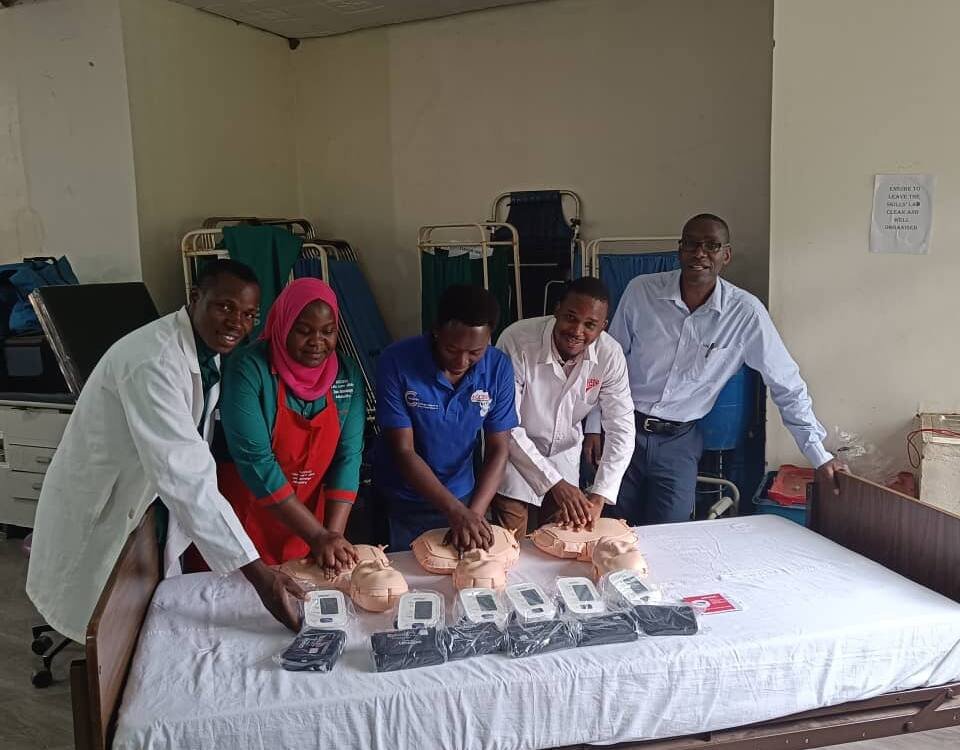
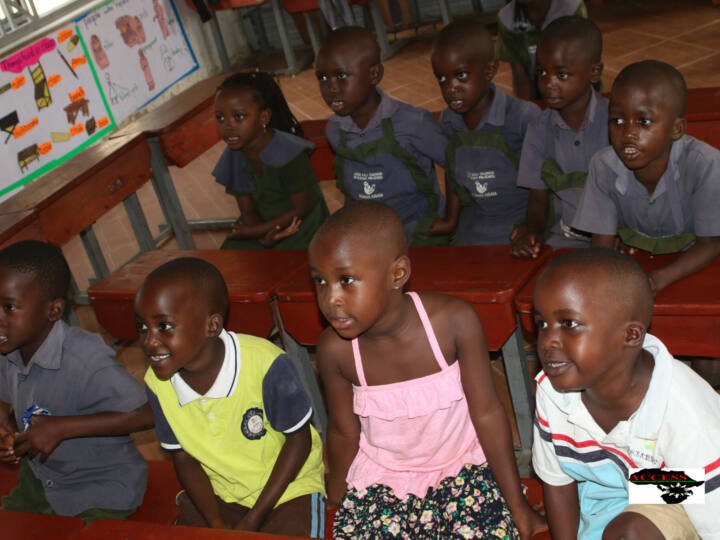
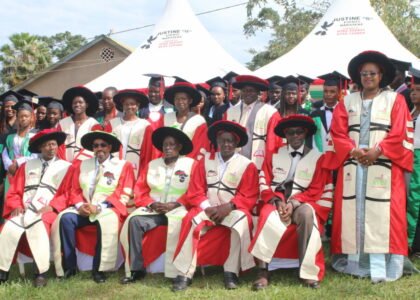
Education added another dimension to that vision. ACCESS’s work moved beyond providing immediate assistance toward developing people who could themselves serve others. Its education programmes now include early childhood development, support for vulnerable children and the training of nurses and midwives. The significance of training health professionals in a rural setting is deeper than the number of graduates produced. Rural communities across Uganda have long faced unequal access to health professionals, while training opportunities and specialised services tend to be concentrated in urban areas. Training a nurse or midwife therefore has a multiplying effect: the benefit does not end with the student who receives an education. It travels with that graduate into clinics, hospitals, maternity wards and communities where future patients may never know that part of the journey began in Nakaseke. ACCESS’s own current reporting highlights more than 170 nursing and midwifery graduates, illustrating how an organisation initially concerned with vulnerability gradually became involved in building the human capacity needed to respond to it.
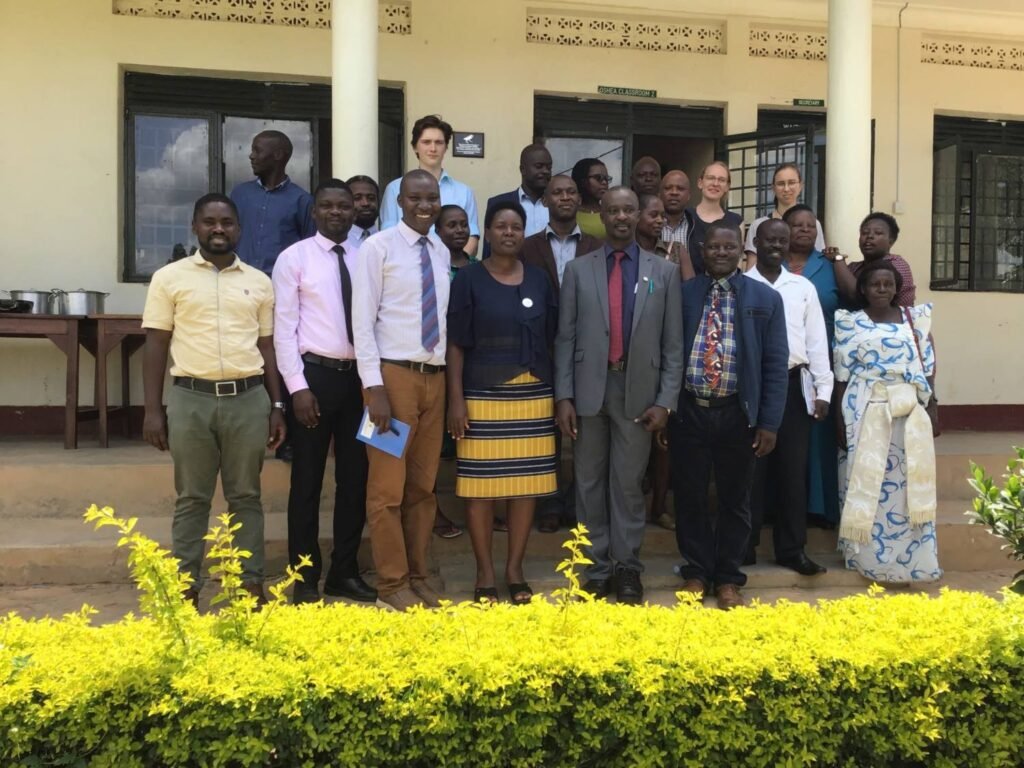
The story also belongs to the partners who chose to walk part of this journey with ACCESS. Partnerships are sometimes reduced to logos printed on reports, yet genuine partnership is built through relationships, trust and a willingness to share responsibility. One example is Partners for ACCESS, whose founder, Dr. Janice R. Levine, first encountered Dr. Kalyesubula at a gathering in Vancouver and subsequently helped develop a supportive and fundraising relationship around ACCESS’s vision. Other partnerships have brought visiting students, clinicians, researchers, educators, donors and institutions into contact with Nakaseke. Some have contributed money; others have contributed equipment, training, technical expertise, research collaboration, mentorship or friendship. In 2026, ACCESS renewed its formal collaboration with Nakaseke District Local Government through an MOU emphasising coordinated and community-driven service delivery. The deeper lesson is that sustainable community development is rarely the achievement of one organisation alone. It grows when local communities, government, professionals, civil society and external partners recognise that each holds only part of the solution.
Over time, the scope of ACCESS widened, and that widening carries an important meaning. Healthcare alone could not answer every problem encountered in vulnerable households. A patient could receive medicine and still return to a home without a stable income. A child could receive school materials while the family remained unable to meet basic needs. A woman could receive health information while continuing to depend economically on circumstances outside her control. And livelihoods themselves could become increasingly fragile when environmental degradation affected land, food systems and household resilience. ACCESS consequently came to work across health, education, economic empowerment and environmental conservation. Its programmes now include clinical and community health services, savings and income-generating activities, early childhood and professional education, as well as initiatives involving trees, sustainable livelihoods and environmental restoration. Seen together, these programmes represent an evolving understanding of wellbeing: that health is connected to education, income, environment, dignity and people’s ability to shape their own future.
Yet perhaps the most important question for an organisation more than two decades into its journey is not simply how much it has grown, but whether it can preserve the human purpose that made growth worthwhile. Organisations can become larger while becoming more distant from the people they were created to serve. Buildings can improve while relationships weaken. Systems can become more professional while compassion becomes procedural. The challenge for ACCESS, therefore, is not only to expand its programmes but to protect the principle embedded in its own mission: creating long-lasting change that is owned by the community. That requires listening to patients as much as professionals, to children as much as donors, to field workers as much as senior managers, and to communities not merely as beneficiaries but as participants in shaping the institution’s direction. Sustainability is ultimately not achieved when a community learns to depend permanently on an organisation. It is achieved when people become increasingly capable of shaping solutions themselves.
This is why the history of ACCESS cannot belong only to three founders, a board, a management team or the names appearing on a website. It also belongs to the OVC who stayed in school when circumstances could easily have pushed that child out; to the patient who found care closer to home; to the nurse whose education became service; to the community health worker who walked to a household that others might never have reached; to the staff member who served faithfully without recognition; and to the partner who decided that distance should not prevent solidarity. Dr. Robert Kalyesubula, Ms. Katali Estherloy Abaliwano and Mr. James Sewanyana helped plant something important in Nakaseke, but an institution becomes meaningful only when many other hands continue to nurture what was planted. Some of those hands will be remembered in photographs and reports. Others may never be named. Yet together they remind us of something easily forgotten in development work: behind every statistic is a person, behind every programme is a story, and behind every lasting institution is a community of people who chose to care.