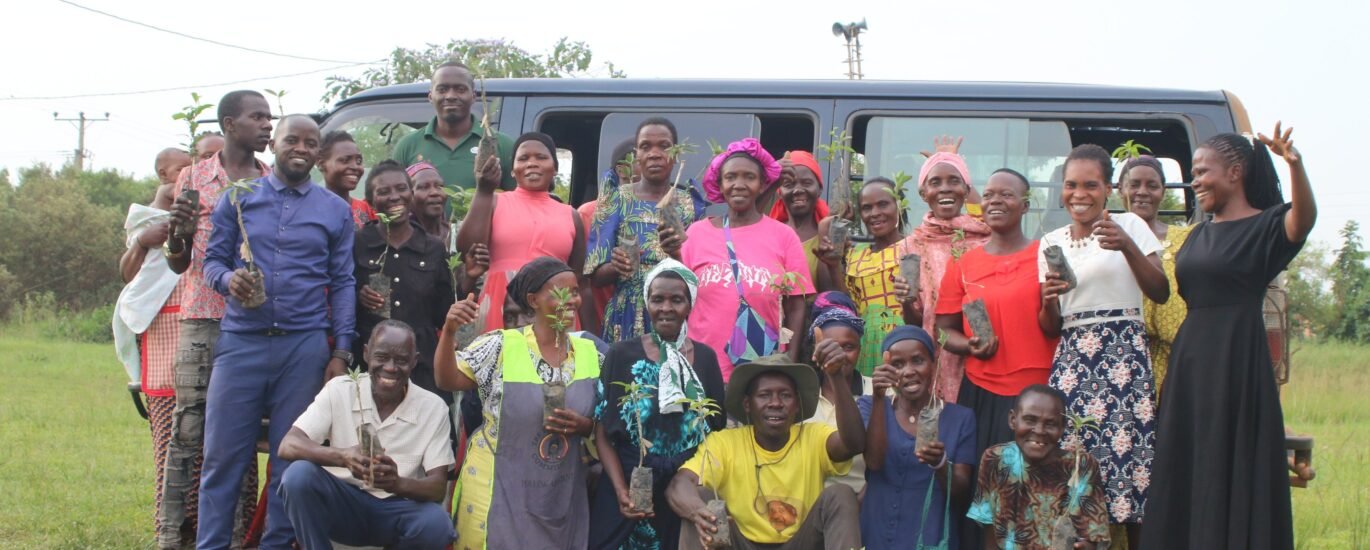
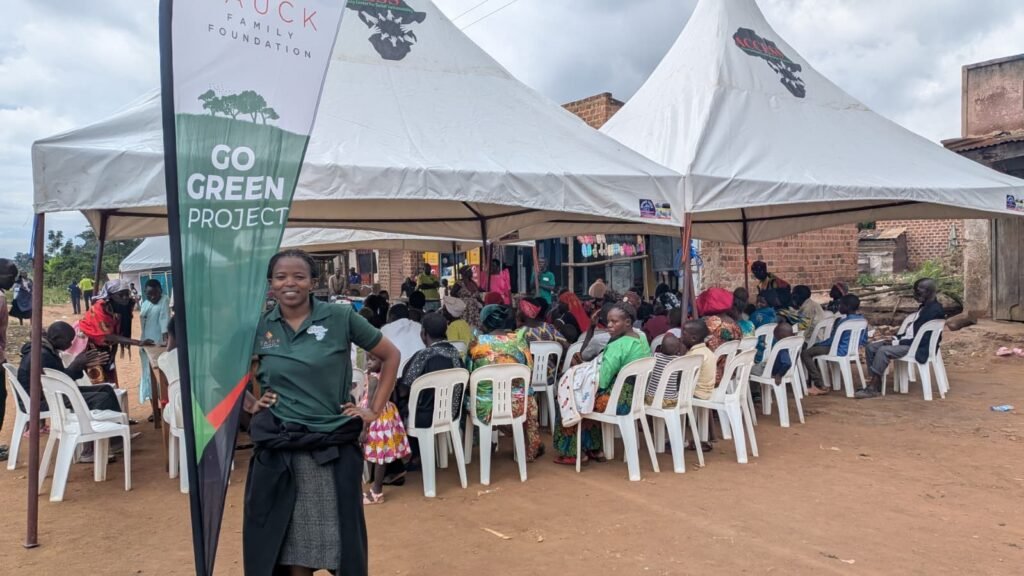
Through our GO GREEN Community Outreach Programme, ACCESS continues to take environmental conservation and essential health services closer to communities across Nakaseke District. From Mayirikit and Kasambya to Kyambogo, Sanze and other communities, the programme is creating greater awareness that the health of people cannot be separated from the health of the environment in which they live.
At every outreach, our message remains clear: when we protect the environment, we also protect our health, livelihoods and future generations.
Our teams engage community members on practical actions they can take to conserve their surroundings, including tree planting, responsible waste management, proper disposal of household waste, community clean-up activities, composting, protecting natural resources and reducing practices that contribute to environmental degradation.
Tree planting remains an important part of the GO GREEN programme. Beyond increasing community knowledge about the importance of trees, ACCESS is promoting tree nurseries, agroforestry and sustainable land-use practices as part of a wider ambition to plant thousands of trees and restore degraded areas. Trees are essential not only for protecting soils and improving the environment but also for supporting food production, providing shade, improving air quality and strengthening communities’ resilience to the effects of climate change.
We are also promoting sustainable livelihood alternatives that can reduce dependence on environmentally harmful practices. Communities are being introduced to activities such as briquette production, beekeeping and climate-smart agriculture. Briquettes provide an alternative to excessive dependence on charcoal and firewood, while beekeeping supports both household incomes and environmental conservation through pollination.
Our GO GREEN activities also encourage proper waste management and the productive use of organic waste through composting. By helping families understand that waste can be managed, recycled or transformed into useful resources, we hope to contribute to cleaner homes, trading centres and villages while reducing environmental and health risks.
An important feature of GO GREEN is that environmental action is integrated with community healthcare.
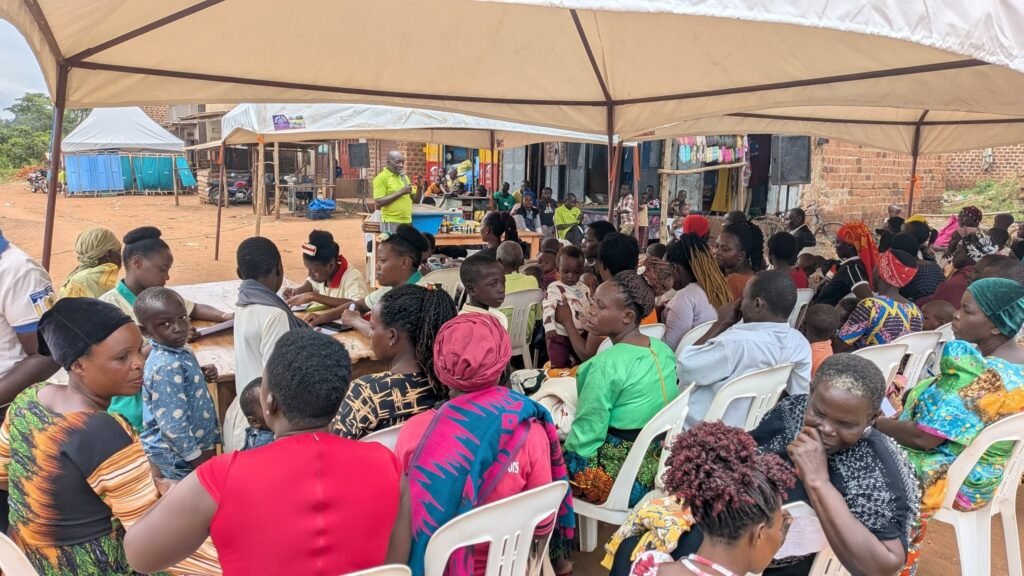
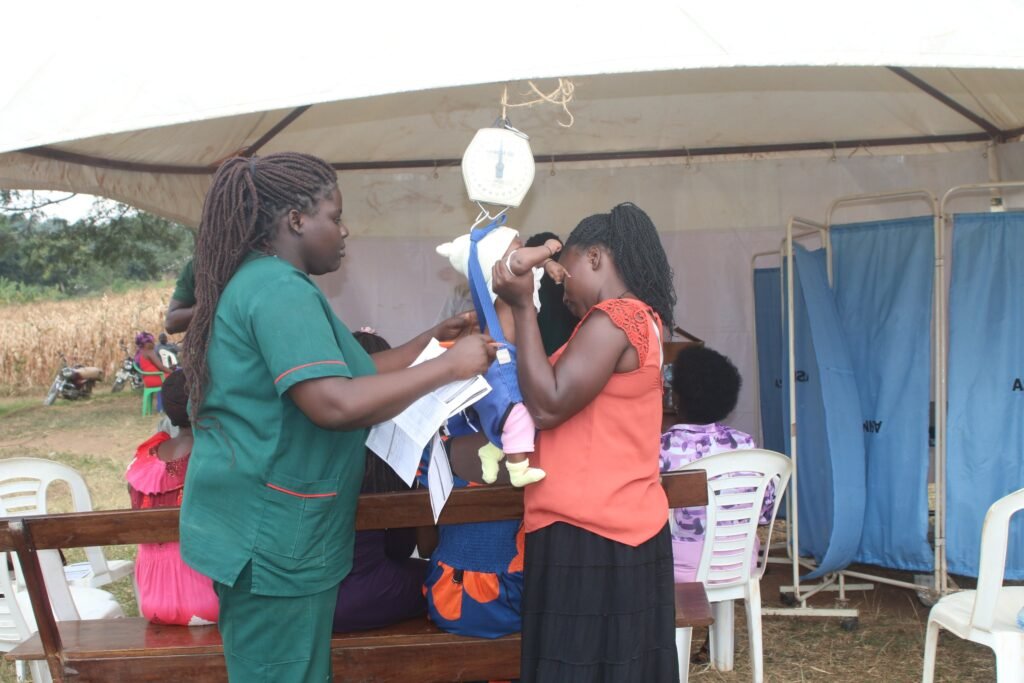
During our outreaches, the ACCESS health team provides services such as general medical consultations, malaria testing, HIV testing and counselling, screening for non-communicable diseases such as hypertension and diabetes, family-planning services, child immunisation, nutrition and health education, and distribution of essential medicines and mosquito nets where available.
This integrated approach enables community members to learn about environmental conservation while also accessing healthcare services that may otherwise be difficult to reach.
At Mayirikit, for example, the outreach reached 294 community members, including 76 children and 218 adults. A total of 121 medical consultations were conducted, while community members also received malaria testing, HIV services, family-planning support, immunisation, medication and mosquito nets. Importantly, 20 community members registered their interest in receiving further GO GREEN training, demonstrating growing community interest in becoming active participants in environmental protection.
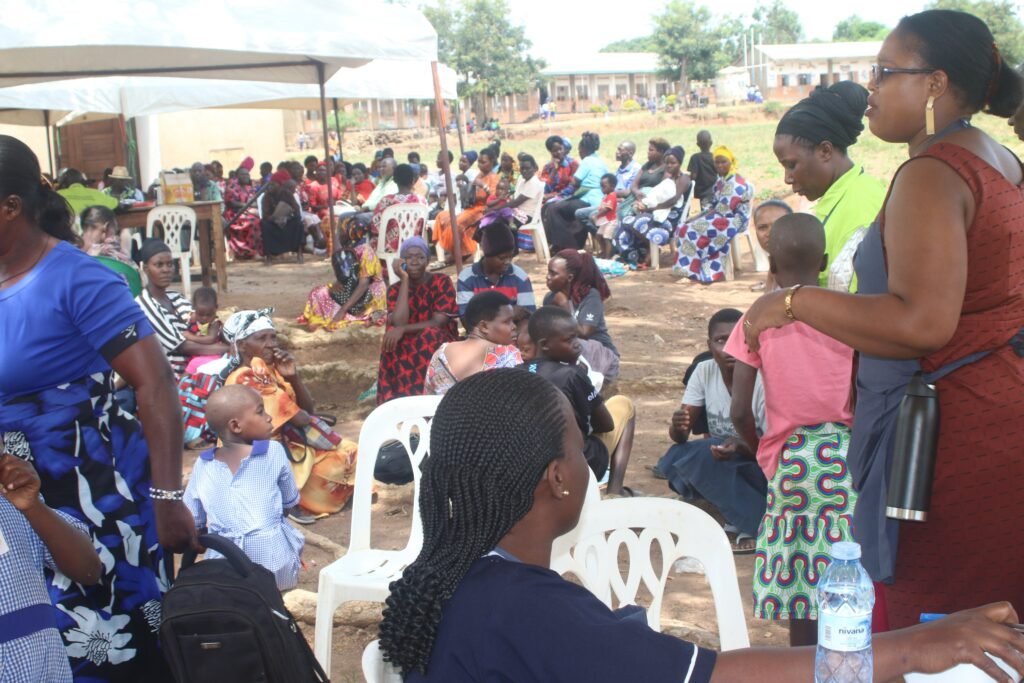
The GO GREEN outreach later reached Kasambya, bringing together 190 community members—71 males and 119 females. Alongside discussions on tree planting, environmental conservation, responsible waste management and maintaining cleaner surroundings, our medical team provided care to community members. The outreach recorded 108 general outpatient contacts, as well as family-planning and immunisation services and the distribution of mosquito nets. Encouragingly, 33 community members expressed willingness to participate in further GO GREEN activities and training.
Other community engagements have similarly combined environmental awareness with access to health services. During one integrated outreach, 167 community members participated in both the environmental-awareness activities and clinic services, with 34 people expressing interest in further green-skills training.
These numbers represent much more than attendance. They represent families gaining access to healthcare, people learning how to protect their surroundings, young people seeing opportunities in green livelihoods and communities beginning to recognise their own role in responding to environmental challenges.
The programme is also strengthening environmental education beyond individual outreach days. Through community sensitisation meetings, demonstration activities, school environmental clubs, radio discussions and practical training, GO GREEN seeks to ensure that knowledge continues spreading from one household to another.
Our longer-term activities include the establishment and strengthening of tree nurseries, demonstration plots and apiaries, as well as training community members in beekeeping, composting, briquette production and sustainable agriculture. These activities are intended to create environmental benefits while also providing opportunities for families to improve their livelihoods.
GO GREEN recognises that environmental degradation has direct consequences for human health. Poor waste management can increase disease risks. Loss of trees can contribute to soil degradation, heat and reduced agricultural productivity. Heavy reliance on traditional biomass fuels can expose families to harmful indoor air pollution. Climate-related changes can also affect food security, water availability and the spread of disease.
For this reason, our approach goes beyond asking communities simply to plant trees. We are building understanding of the connection between environment, health and economic wellbeing.
A mother who learns how to manage household waste is helping create a healthier environment for her children. A young person who learns briquette making can earn an income while reducing pressure on forests. A farmer who practices agroforestry can protect the soil while improving productivity. A beekeeper can generate income while supporting pollination and biodiversity. And a community that plants and protects trees today is investing in the wellbeing of generations to come.
As GO GREEN continues reaching more communities across Nakaseke, ACCESS remains committed to strengthening partnerships with local leaders, health workers, young people, women, schools and households so that environmental conservation becomes a shared responsibility.
Our vision is of communities where cleaner surroundings, restored vegetation, sustainable livelihoods and better access to healthcare reinforce one another.
GO GREEN is therefore more than a tree-planting campaign. It is a community movement connecting environmental conservation, health, education and economic empowerment.
Every tree planted matters.
Every cleaner community matters.
Every household that adopts a sustainable practice matters.
Every person reached with health information and healthcare matters.
Together, these actions are helping us build communities that are healthier, greener and more resilient.
When we protect our environment, we protect our health. When we protect our health, we strengthen our families. And when communities act together, we protect the future we all share.